Overview
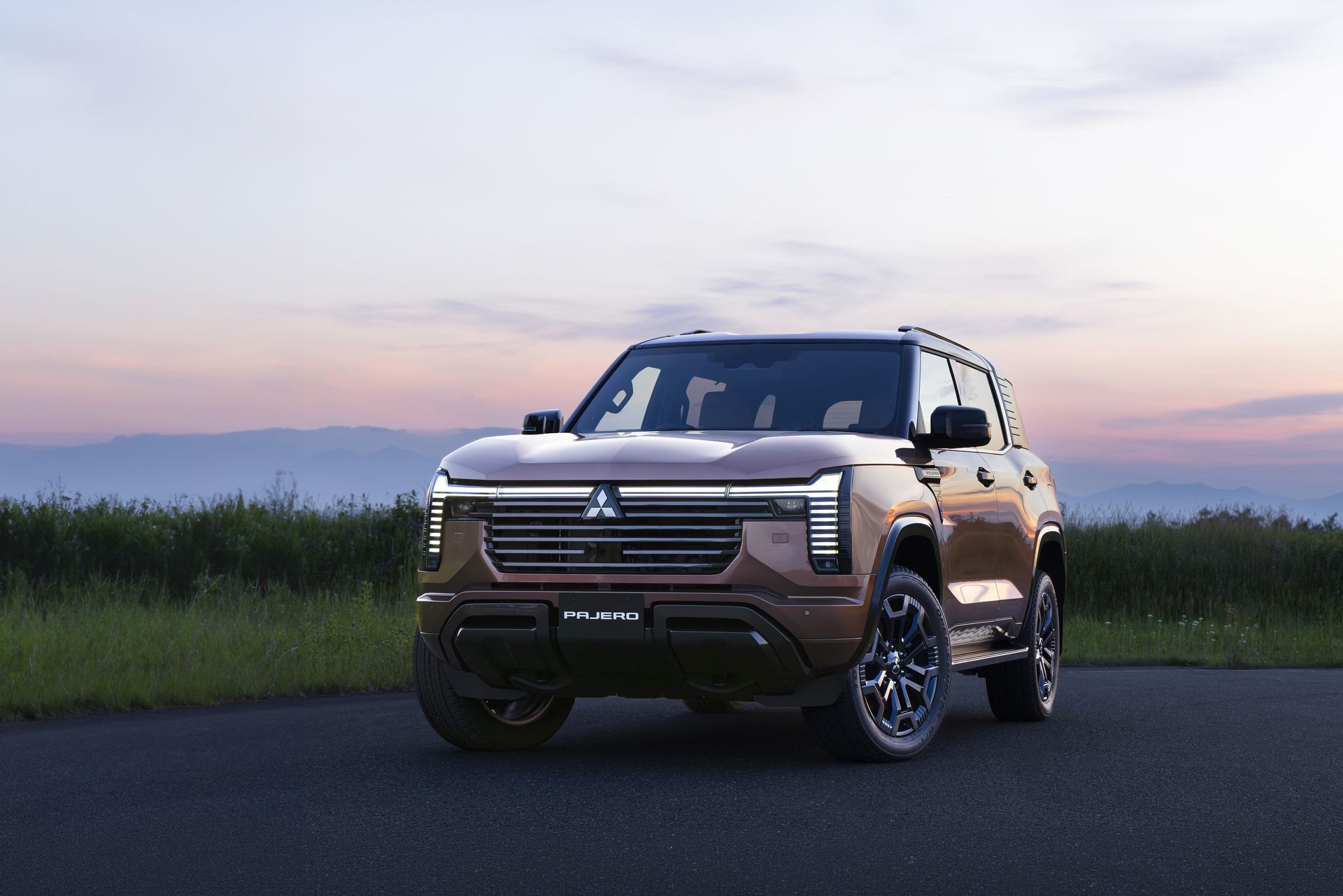
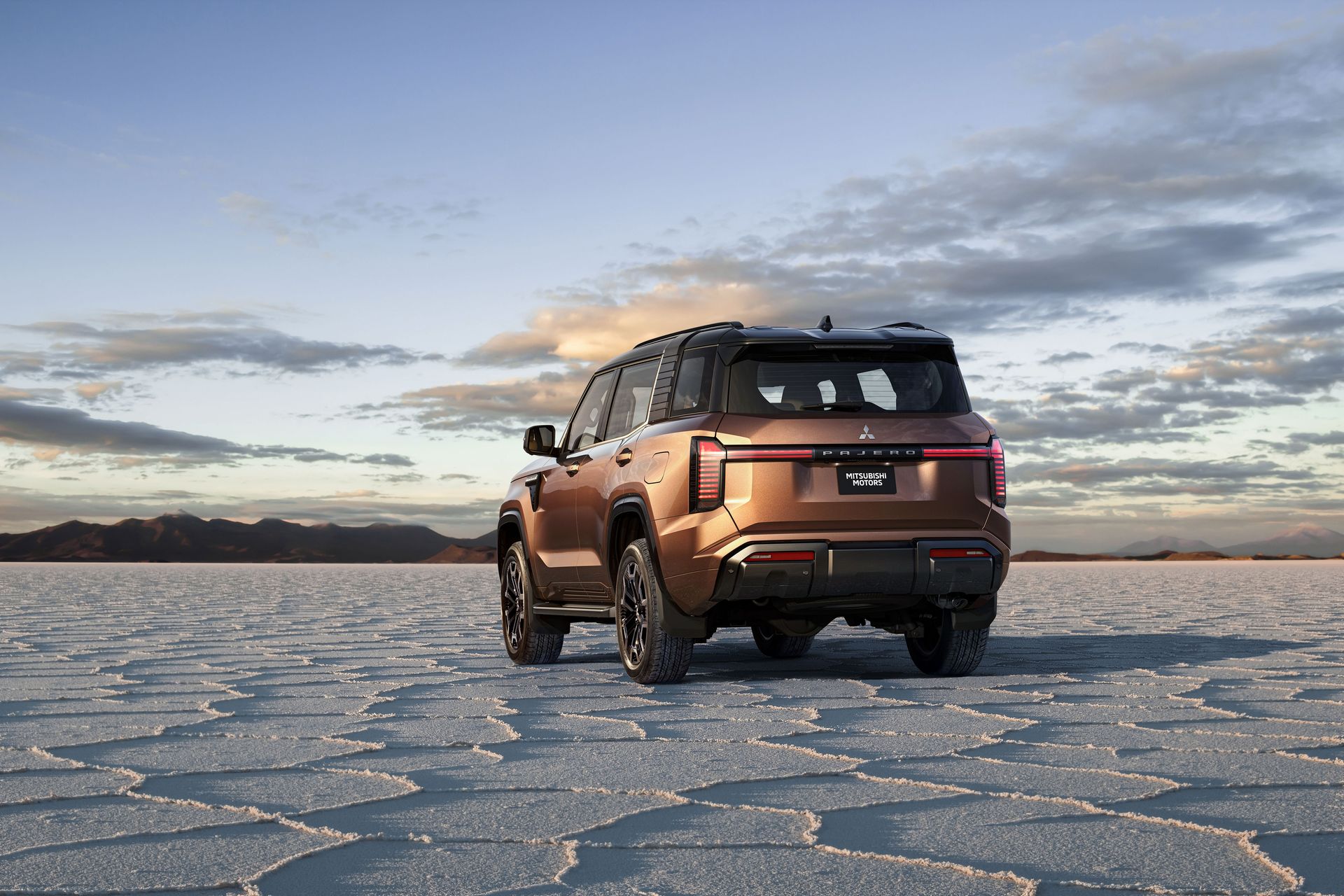
Mitsubishi Motors Corporation has unveiled the new Pajero, a fully redesigned four-wheel-drive SUV that marks the return of the Pajero nameplate to the company’s lineup.
A Legacy worth reviving
The Mitsubishi Pajero was introduced in 1982 as a four-wheel-drive SUV designed for both off-road use and everyday driving. Its combination of off-road capability and passenger-car comfort helped gain popularity, particularly among outdoor enthusiasts, and contributed to the growth of Japan’s recreational vehicle market during the 1990s while also keeping the price affordable and competitive.
It was produced across four generations, with total production exceeding 3.29 million units. It was sold in more than 170 countries and regions during its production run.
The New Generation
The new Pajero holds its iconic legacy but also evolved to enter the modern era of technology and comfort by positing the car as a premium offering within the SUV lineup of Mitsubishi.
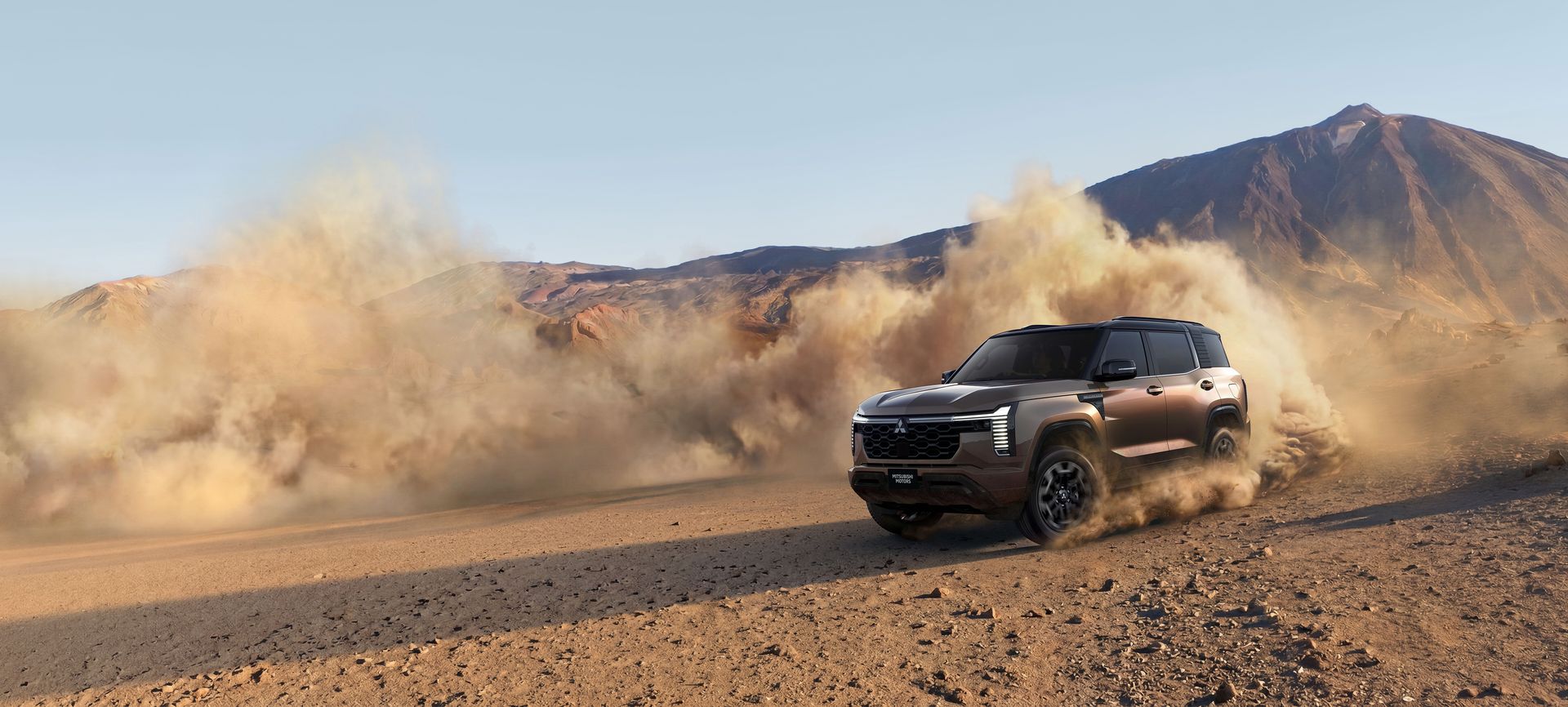
The new gen vehicle is built on the model’s established focus on off-road capability and everyday usability. Its development combines four-wheel-drive performance and durability with passenger comfort and ease of handling, while adding a greater emphasis on interior quality and equipment.
Production of the new Pajero will take place at Mitsubishi Motors’ manufacturing facility in Thailand. Thailand will be the first market to receive the new model, followed by Japan and Australia during the first few months of 2027. From April 2027, Mitsubishi plans to expand sales of the Pajero to approximately 100 countries and regions, including markets across ASEAN, Latin America and the Middle East.
Powertrain: 2.4L Clean Diesel and New 8 Speed Automatic Transmission
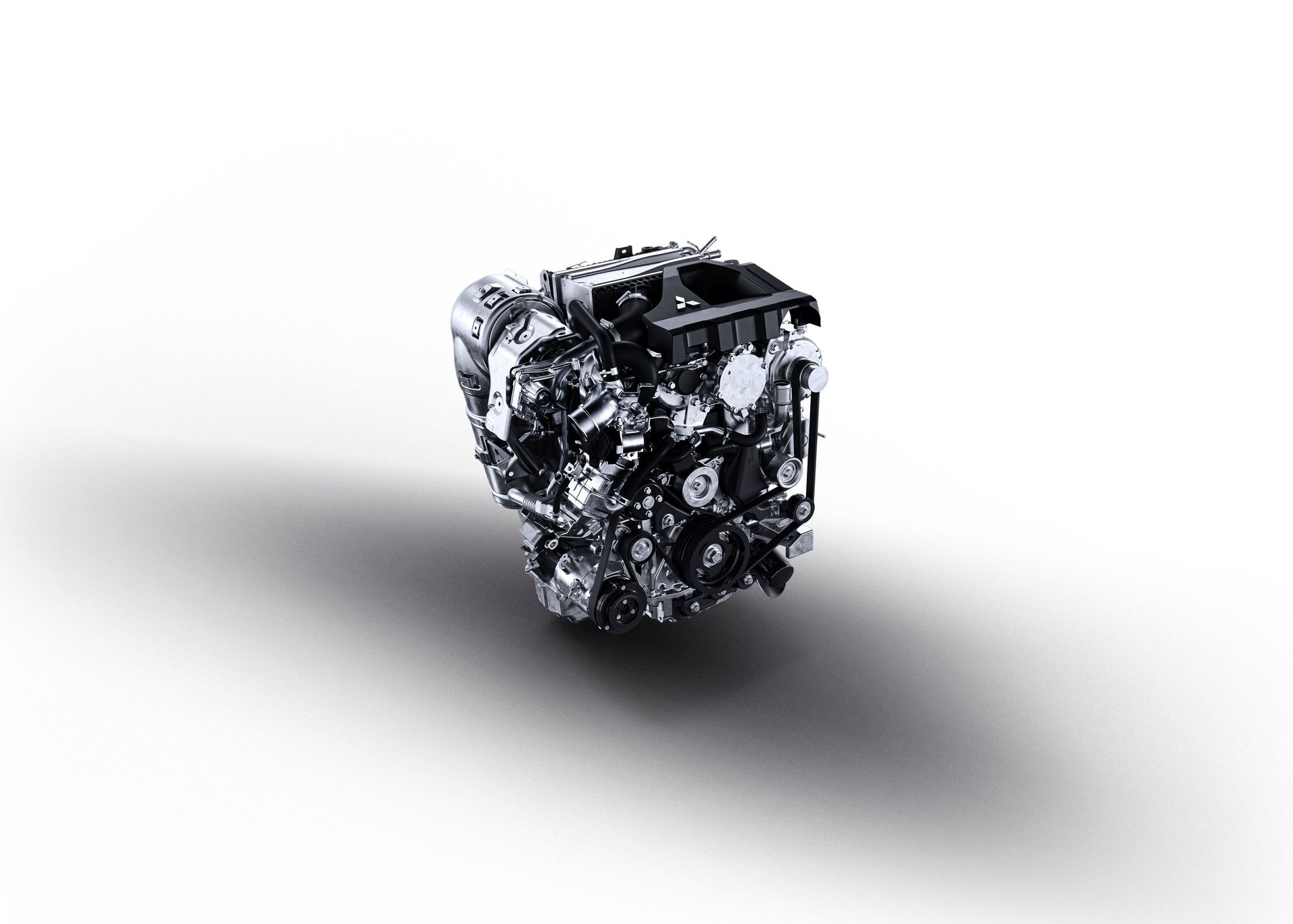
The Pajero is powered by a 2.4-liter diesel engine equipped with a single variable-geometry turbocharger (VGT), producing a maximum torque of 480 Nm. The engine is paired with a newly developed eight-speed automatic transmission with a Sport mode.
The powertrain is designed to provide consistent acceleration across a wide range of driving conditions, from urban and highway driving to off-road use. Mitsubishi also says the new powertrain has been developed with reduced noise levels compared with the previous model.
Dimensions, Chassis and Suspension System
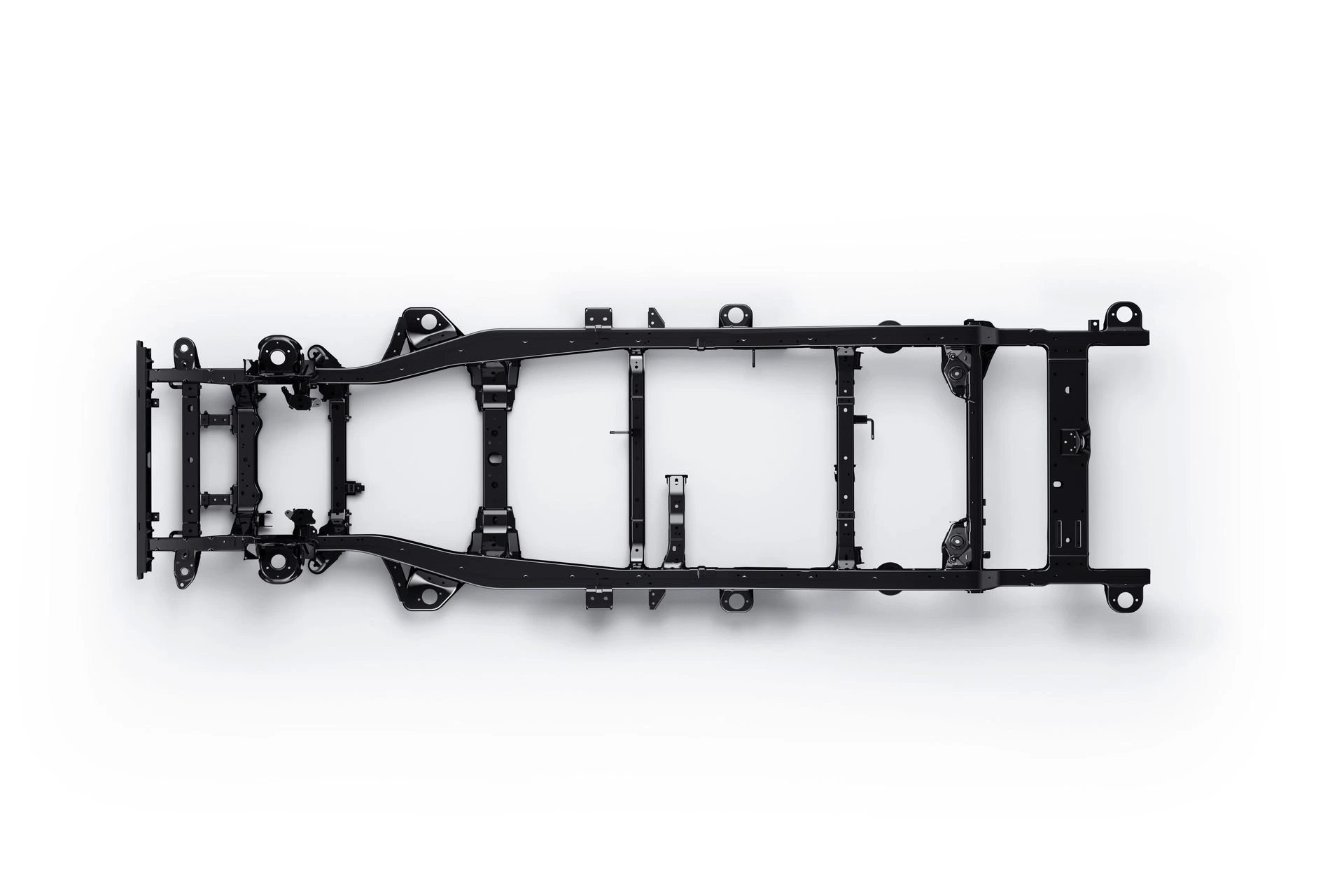
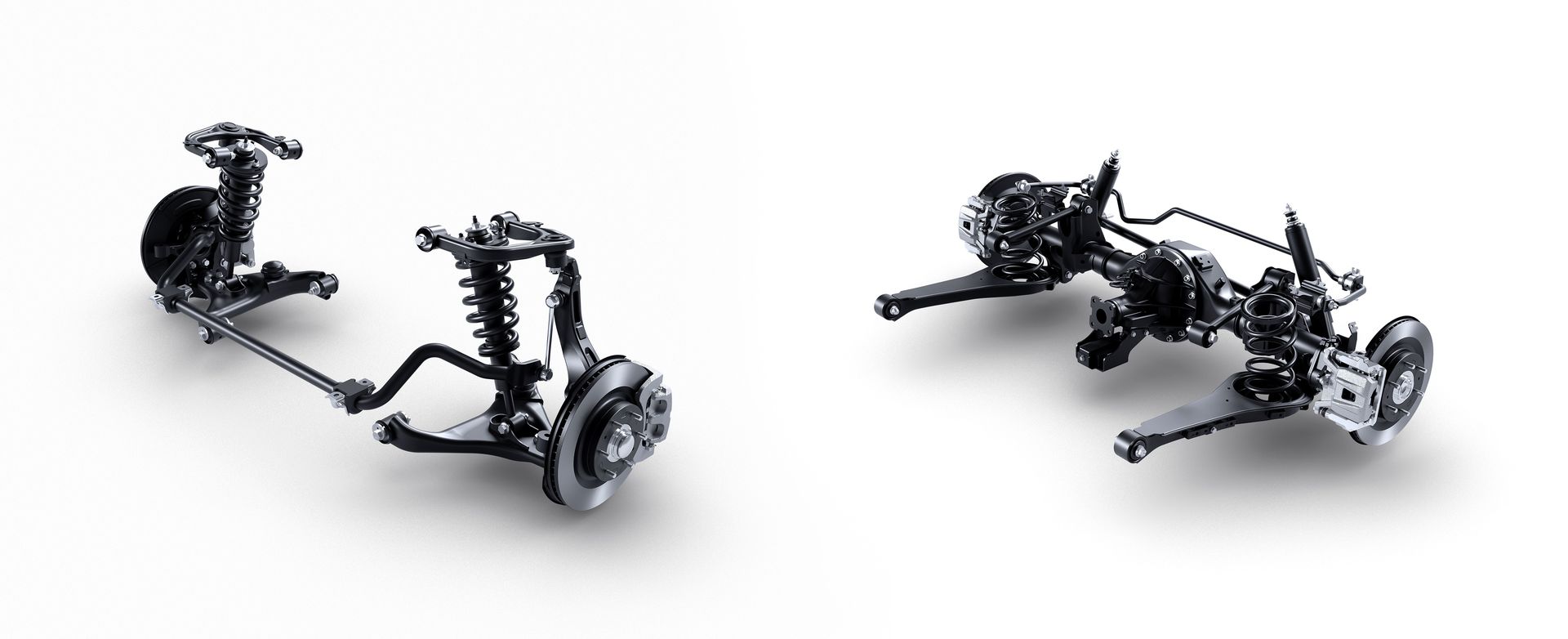
The car uses a rigid ladder frame with increased use of high-tensile steel to reduce weight similar to the Triton pickup. The frame has also been redesigned with larger cross-sectional areas to increase torsional and bending rigidity. Mitsubishi says these changes are intended to improve structural durability while supporting handling stability and ride comfort.
The suspension uses an independent double-wishbone setup at the front and a newly developed five-link rigid axle at the rear. The suspension layout is designed to maintain tire contact over uneven surfaces while providing stable handling on paved roads.
Mitsubishi has also strengthened the body mounts to reduce vibration transmitted into the cabin, particularly when driving over rough surfaces. These changes form part of the Pajero's development focus on balancing off-road capability with on-road comfort.
The new Pajero measures 4,920 mm in length, 1,925 mm in width and 1,910 mm in height, with a 2,870 mm wheelbase and front and rear track widths of 1,630 mm.
It has 230 mm of ground clearance, with an approach angle of 30.4 degrees, a breakover angle of 22.6 degrees and a departure angle of 25.8 degrees. Along with the ladder frame and suspension system, the vehicle has a 52:48 front-to-rear weight distribution.
Driving Modes and 4WD system
The new Pajero is equipped with Mitsubishi Motors' Super-All Wheel Control (S-AWC) system, which integrates several vehicle-dynamics and braking functions. Its Super Select 4WD-II (SS4-II) system provides four selectable drive modes: 2H for rear-wheel drive, 4H for full-time four-wheel drive, 4HLc with a locked center differential, and 4LLc with a locked center differential and low-range gearing.
S-AWC also incorporates Active Yaw Control (AYC), which manages torque distribution between the left and right wheels through the front brakes, as well as Active Stability and Traction Control (ASTC) and the Anti-lock Braking System (ABS). These systems work together to manage driving and braking forces at the four wheels according to road conditions and driver inputs.
The car also offers seven selectable drive modes: Normal, Eco, Gravel, Snow, Mud, Sand, and Rock. Each mode adjusts the vehicle's control systems for different road and surface conditions. The braking system uses 18-inch brake rotors and an electric brake booster.
Driver Assistance and Safety
The new Pajero is equipped with a range of active safety and driver assistance systems depending on the trim level. These include Forward Collision Mitigation (FCM), which can detect pedestrians, cyclists and motorcyclists and includes junction-assist functionality, as well as Predictive Forward Collision Warning (PFCW) and Emergency Assist for Pedal Misapplication (EAPM).
For the first time, the Pajero also features Emergency Lane Assist (ELA), which uses a forward-facing camera and radar to detect lane markings and surrounding vehicles and can provide warnings and steering assistance when a potential lane departure is detected. Front Cross Traffic Alert (FCTA) monitors for vehicles approaching from either side at intersections and alerts the driver when a potential crossing-path collision is detected.
It also features Mitsubishi Motors' MI-PILOT highway driving assistance system, which combines Adaptive Cruise Control (ACC) and Lane Keep Assist (LKA) to maintain a set following distance and help keep the vehicle centered in its lane.
The safety equipment includes eight airbags, including an SRS center airbag designed to reduce the risk of contact between the front occupants during a collision.
Interior - Passenger Comfort
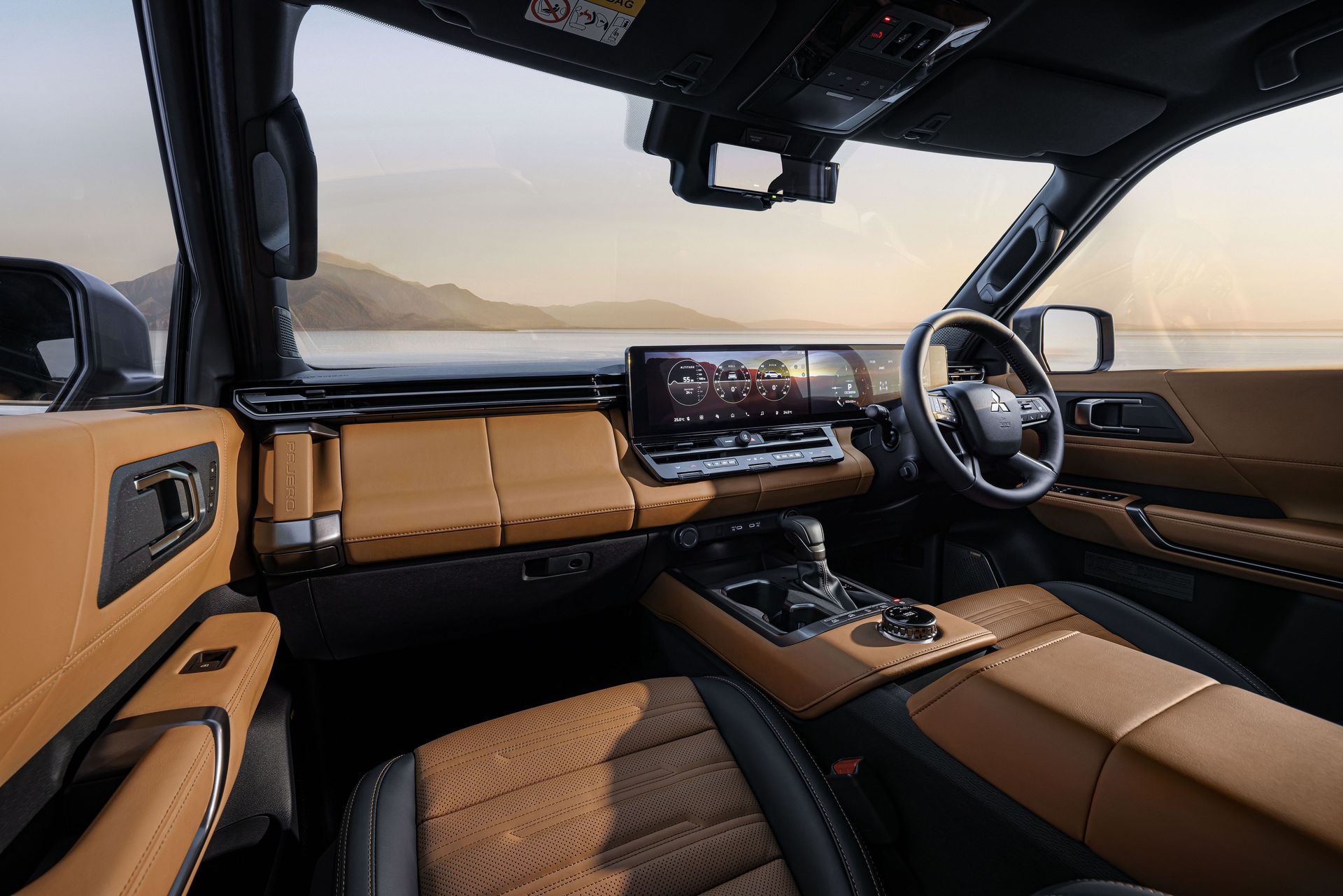
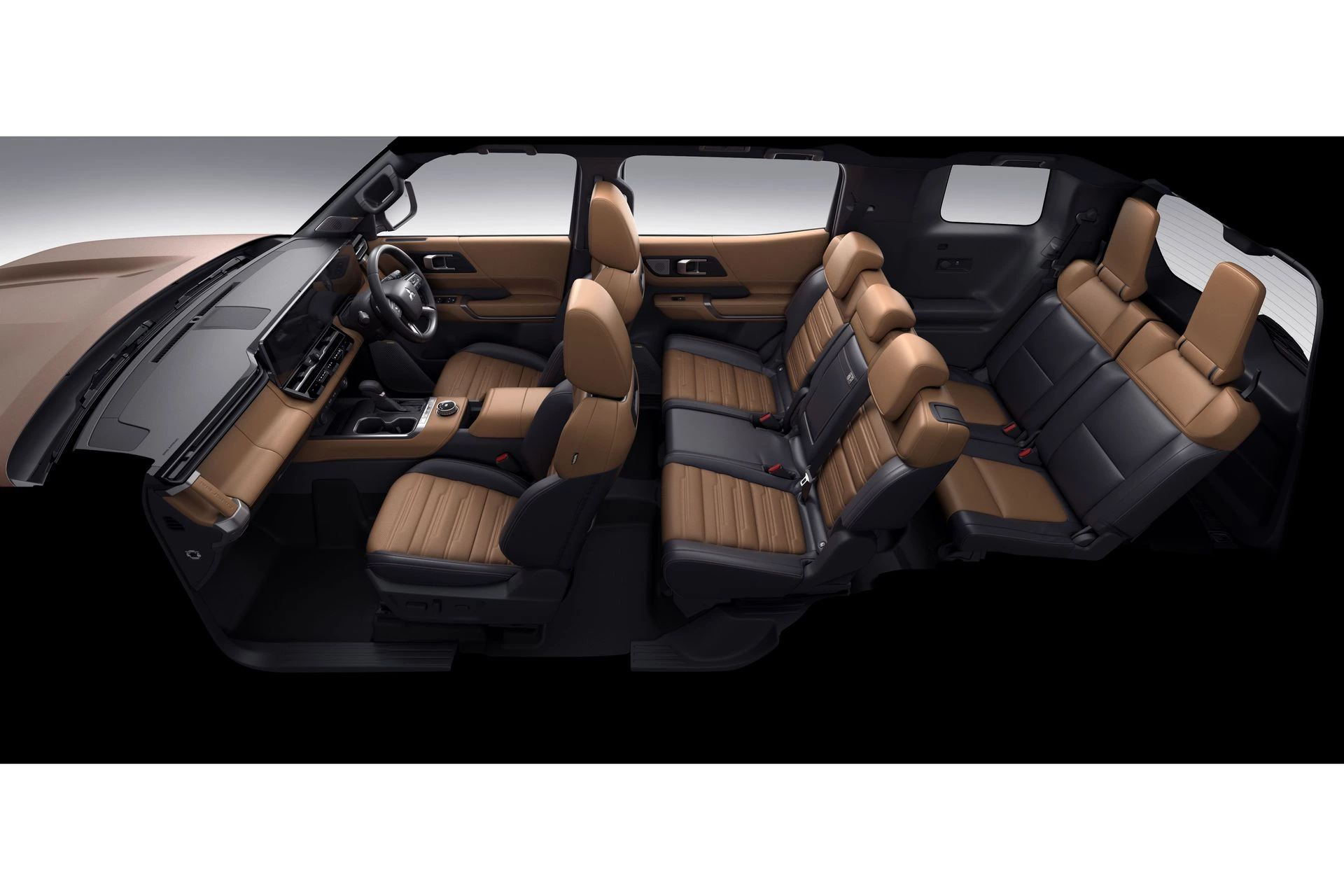
The new Pajero features a three-row, seven-seat interior, with the cabin designed to provide space for passengers across all three rows. The driver's seat is positioned higher to provide a more elevated view of the vehicle, while the second row has a 150 mm sliding range and a tumble mechanism to improve access to the third row.
Depending on the trim level, passenger comfort features include seat ventilation and three-zone automatic climate control with independent temperature settings for the front, second and third rows and manual rear window shades.
Top level trim also features double-glazed windows for all doors and an acoustic windshield for a quieter cabin.
Interior - Technology
Infotainment:
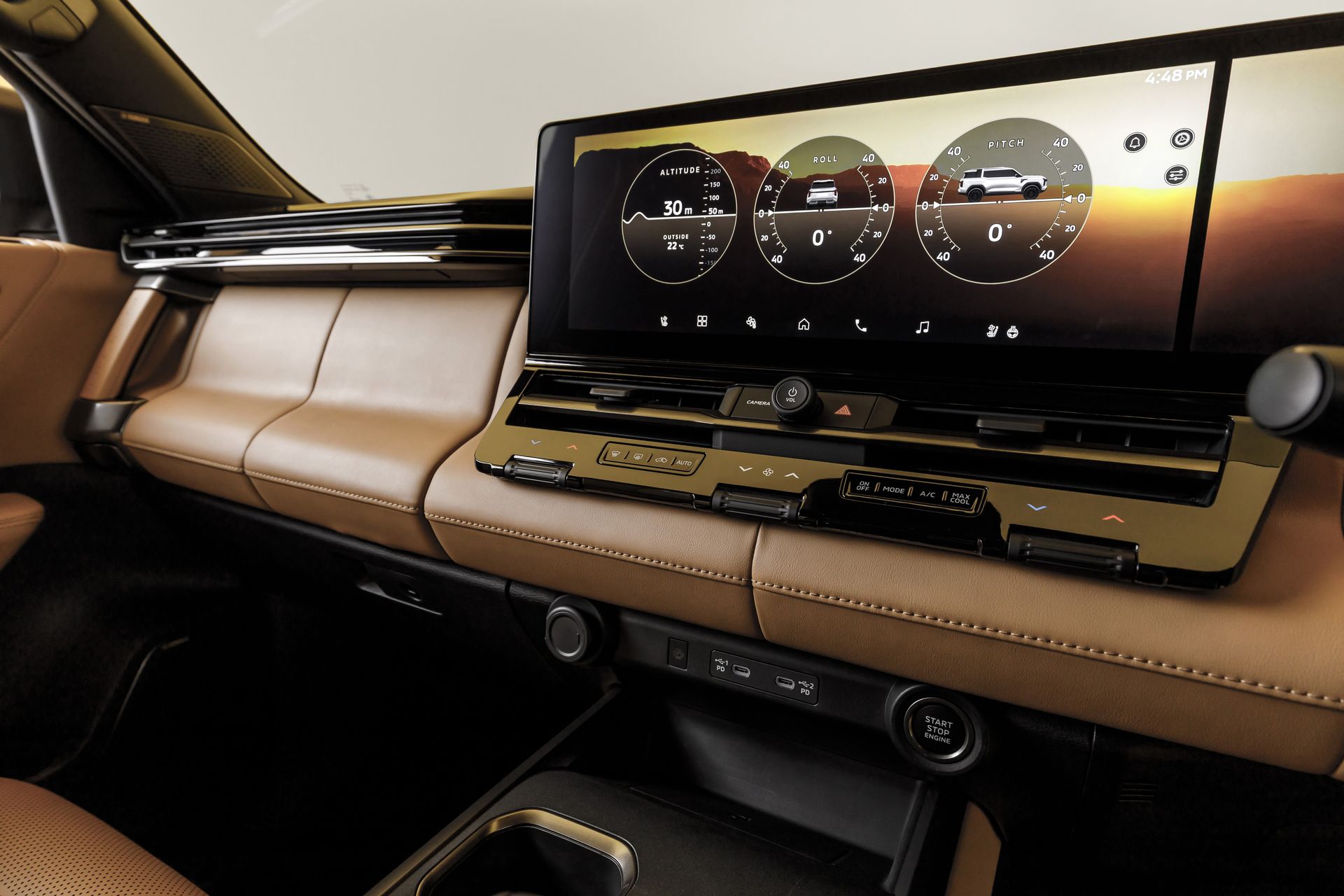
The new Pajero is equipped with a dual-screen setup, with entry-level models featuring twin 12.3-inch displays and flagship versions receiving dual 14.3-inch displays, shared with the latest Nissan Patrol. Physical controls are retained for key functions, including a volume dial, roller dials for air temperature and fan speed, and buttons for functions such as air recirculation and automatic climate control.
3D Multi Around Monitor
The 3D Multi Around Monitor combines images from four vehicle-mounted cameras with a 3D model of the vehicle to provide a real-time view of its surroundings.
The system processes approximately 30 frames per second and is designed to assist with parking and maneuvering in tight spaces.
It also includes a front under-floor view that shows the road surface beneath and ahead of the vehicle, including areas normally hidden from the driver's view.
The view is automatically displayed when 4HLc or 4LLc is selected in 4WD mode and can also be activated manually.Mitsubishi Connect:
Mitsubishi Connect provides a range of connected services, including remote operation of the vehicle's climate control and remote vehicle-status checks through a smartphone. The system also includes an SOS call function that connects occupants to an operation center for emergency assistance.
Yamaha Sound System:
The Pajero is also available with the Dynamic Sound Yamaha Ultimate audio system, jointly developed with Yamaha Corporation. The system uses 12 speakers and dual amplifiers, along with noise compensation technology that adjusts the volume and audio tuning according to vehicle speed to compensate for road noise.
UAE Launch: What We Know
Currently, Al Habtoor Motors have not yet provided any information on the new Pajero launch for the UAE, as mentioned by the brand, it is expected to launch in the middle of 2027 with the possibility of the petrol engine featured for the middle east market.